
Light, shadow, and practice
Understanding your energy through the moon cycle and choosing the right yoga practice for each phase
My relationship with the moon started long before yoga came into my life. As a child, my dad helped me map constellations across my bedroom ceiling in glow-in-the-dark stars, collect astrology magazines, and learn tree names on long walks. I didn’t realise it then, but I was already drawn to the quiet logic of cycles - the way nature expands, contracts, rests, grows, and begins again.
Years later, through yoga, motherhood, teacher training, reading books by Yasmin Boland, Kirsty Gallagher, and deeper Vedic teachings in Astrology of the Seers, I realised something simple but transformative: my energy moves in cycles, not straight lines. The moon offered a rhythm that made sense to the way my body, mind, and nervous system naturally operate.
And so I began linking my practice to the lunar cycle - not because it’s mystical, but because it’s practical.
Read on to learn how the moon can shape your yoga practice, too.
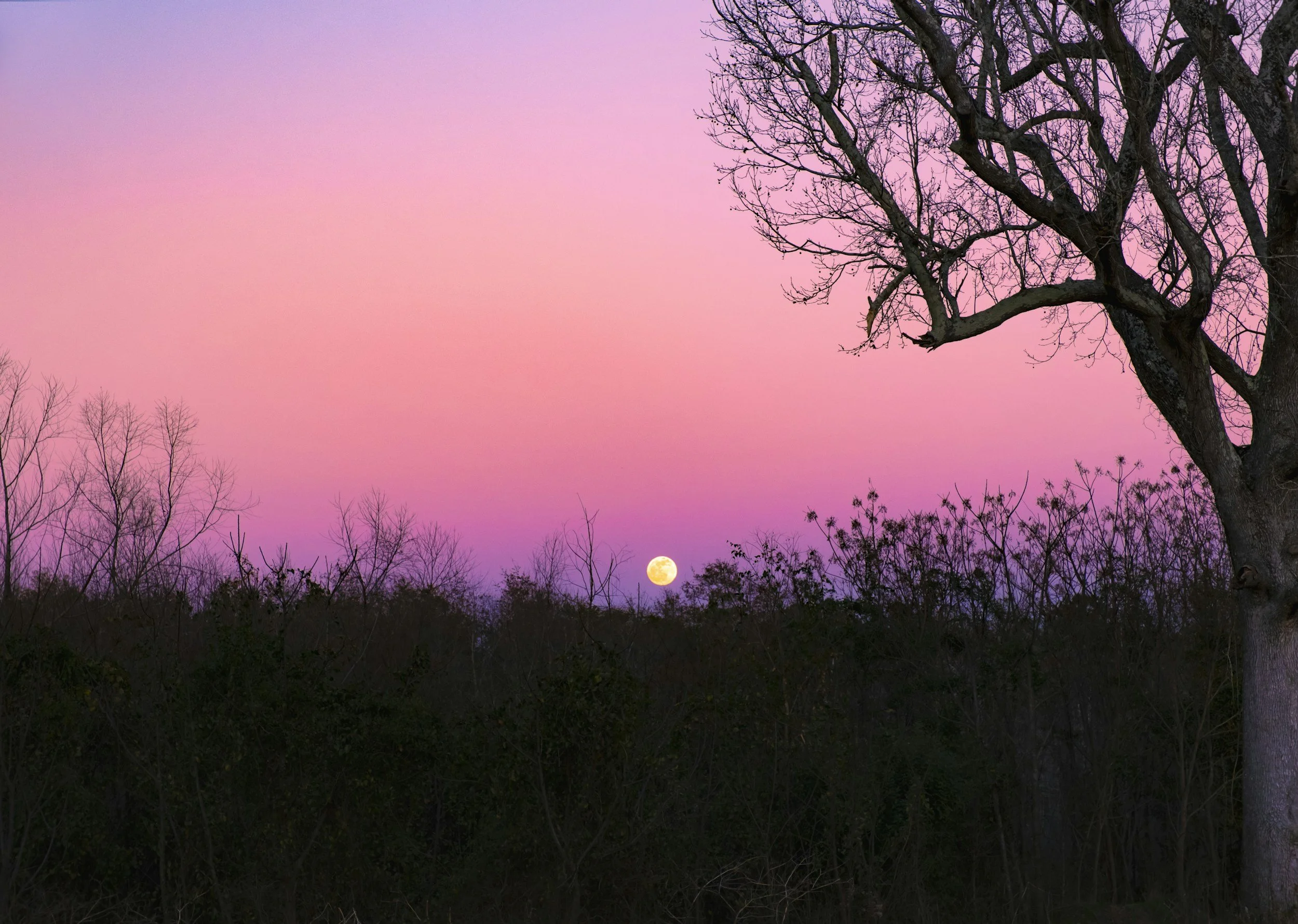
Working with the moon is simply a way of understanding your own energy cycles, and that’s something everyone can benefit from.
New Moon - rooting, resting, recalibration
The New Moon arrives in complete darkness, and with it a natural drop in outward energy. In both Western astrology and Vedic wisdom, this is a time when we turn inward. Emotionally, it can feel like a quiet fog settling over everything - not heavy, just soft. You may notice lower energy, a desire for solitude, or a sense of wanting to pause before beginning again. Some people feel introspective or tender, others feel directionless or flat, and occasionally there’s a subtle sense of possibility resting beneath the stillness.
During this phase, the mind often wants spaciousness rather than stimulation, and the body usually responds well to grounding. Slow Hatha or gentle Hatha Flow supports this natural settling.
During this phase, I choose movements that restore stability rather than ignite effort. You might try Child’s Pose, Cat–Cow, Lunges, supported forward folds, and soft twists. Breathwork is steady with long exhales.
The New Moon teaches us to begin again without urgency - to soften our expectations and let intentions rise naturally instead of forcing them.
Waxing Moon - building strength and steady growth
As the moon begins to brighten, energy gradually increases. In Western tradition, this is the time for building momentum, while in Vedic teaching, this brightening half of the month supports rising prana and physical vitality. Emotionally, this can feel like the first clear day after a long stretch of cloud: motivation returns, focus sharpens, and you may feel more capable, organised, and willing to take small steps forward. There’s often a gentle confidence here - not a rush, just a sense of pace returning.
In your practice, this phase is supported by Hatha Flow and, if your energy calls for it, some Vinyasa. Stronger standing postures, Sun Salutations, and steady balance work mirror the moon’s gradual build. This is the time to develop strength slowly, one thoughtful layer at a time, trusting the process rather than forcing progress. It’s a phase that favours consistency over intensity and reminds us that growth often happens in small, steady increments.
Full Moon - meeting intensity with awareness
When the moon becomes full, everything tends to feel amplified. Western astrology describes heightened emotion and clarity, and Vedic teachings acknowledge increased prana and sensitivity of the mind. This can translate into restlessness, emotional intensity, vivid dreams, creative surges, or simply feeling “full.” For some, this is a moment of clarity; for others, it’s overwhelming. Sleep can be lighter, thoughts louder, and emotions closer to the surface.
This is when your practice benefits most from honesty. If you feel energised, a strong Hatha Flow or Vinyasa can help release and redirect the heightened intensity - movements like Wild Thing, Goddess flow, or a creative variation of Sun Salutations. If you feel overstimulated, anxious, or deeply emotional, grounding Hatha or soothing Yin may be far more supportive. Long forward folds, supported restorative shapes, Legs Up the Wall, and gentle twists can help steady the mind. The Full Moon asks us to pay attention to what is rising and to choose the practice that best meets the truth of the moment.
This is the phase where I resist the urge to force a plan and instead ask:
What’s actually here?
The Full Moon teaches honesty. Your practice becomes a mirror.
Waning Moon - softening, releasing, letting go
As the moon wanes, energy gently pulls inward again. This phase is seen as a natural time for release and simplification, and Vedic wisdom teaches that prana begins to withdraw from outward activity, making this a supportive time for surrender and emotional processing. You may notice a desire to slow your schedule, declutter your mind, or let go of something that has been weighing on you. There can be a softening during this phase - a sense of clarity yet paired with fatigue, or waves of tenderness that ask for space.
In yoga, this is where Yin or a more restorative Hatha becomes profoundly supportive. Long-held shapes like Dragon, Caterpillar, Sphinx, or reclined twists help the body unwind, and the mind release its grip. This was the lunar energy that supported me through some of my own deepest releases - not through sudden decisions, but through gentle, compassionate loosening.
Because Yin plays such a profound role here, my next resource will be a complete guide to Yin - follow me for more information soon.
How can you begin practising with the moon?
You don’t need to memorise astrology or track every transit.
Just tune into the four energetic tides of the month:
New Moon - slow, grounding Hatha or Hatha Flow
Waxing - steady strength with Hatha Flow or Vinyasa
Full Moon - meet intensity honestly, strong or soft, whatever your practice
Waning - unwind with Yin and gentle Hatha
Let your practice be responsive, not rigid.
If you’d like support, I created a guide that breaks down each phase with poses and journal prompts.
Why this rhythm works - and a truth that matters
One of the most important lessons in lunar-aligned practice is recognising that it’s not always easy to know what you genuinely need. Sometimes stillness feels like the easiest choice, and yet what your body is truly asking for is the heat and movement of a strong practice to shift stagnant emotion or clear the mind. And sometimes the opposite happens - movement becomes a way to avoid sitting with discomfort, and what’s really needed is the courage to be still, to hold a shape, and to meet what arises.
The moon doesn’t dictate the practice; it simply offers a rhythm. The real work is learning to notice the difference between rest and resistance, and between movement and avoidance. This is where yoga becomes a deeper form of listening - not to rules or expectations, but to the truth underneath.
